Short answer: there is no reliable single price for shipping from China to Mexico. The cost depends on the transport mode, route, final package dimensions, gross weight, product, Incoterm, customs value, duties and taxes, destination handling and delivery address. The fastest way to obtain a usable quote is to provide one complete cargo data set and ask every provider to price the same scope.
Buyers often search for a rate per kilogram, per cubic metre or per container before production is packed. Those figures can be useful for early planning, but they are not a landed-cost commitment. Market capacity changes, and two shipments with the same product value can have very different freight costs because one is compact and stackable while the other is bulky, fragile or delivered to a remote address.
This guide explains what builds the cost of a commercial shipment from China to Mexico and how to prepare a quote request that can be compared. It avoids fixed market rates that quickly become outdated. Customs treatment and importer requirements should be confirmed for the actual product with a qualified Mexican customs professional before shipment.
The eight factors that shape the shipping cost
1. Final packed volume and weight
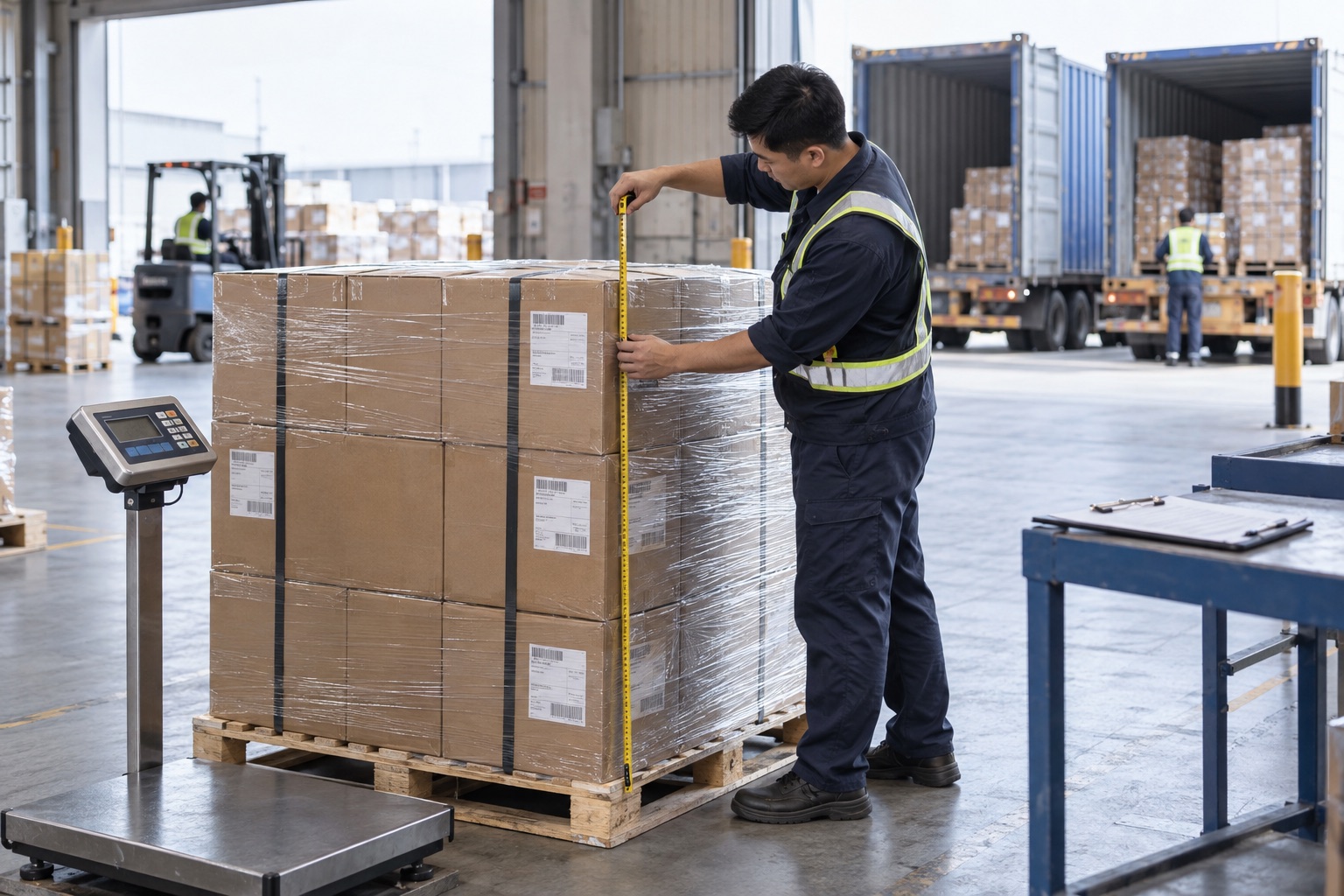
Freight is priced on transport space and handling, not only the product’s net weight. Air carriers compare actual and volumetric weight. Ocean LCL considers measurement and weight with minimums. FCL pricing is based on container equipment and route, but payload and loading limits still apply. Use the dimensions of sealed cartons, pallets or crates after packaging is complete.
2. Transport mode and service level
Express courier, standard air freight, ocean LCL and ocean FCL serve different shipment profiles. A small urgent order may be cheaper in business terms by air even when the freight rate is higher. A bulky planned order usually favors sea. Door-to-door DDP includes a broader scope than port-to-port freight, so its headline total should be higher because more stages are covered.
3. Origin location in China
Pickup from Yiwu, Shenzhen, Guangzhou, Ningbo, Shanghai, Qingdao or an inland factory creates different trucking and consolidation costs. Several suppliers add collections, receiving, storage and coordination. Consolidating at one warehouse can reduce duplicated international shipments, but the warehouse services must be included.
4. Export port, airport and route
The nearest gateway is not always the best route. Carrier capacity, direct service, transshipment, cutoff, inland connection and destination operation affect cost and reliability. A lower main-freight rate can be offset by extra trucking or a less efficient arrival process.
5. Product and handling requirements
Batteries, liquids, powders, chemicals, magnets, food-contact products, machinery with oil, oversized pieces and fragile cargo can require approvals, testing, special packaging or different carriers. Non-stackable freight consumes usable space. Heavy or long pieces may require forklifts, cranes, flat racks or dedicated delivery equipment.
6. Incoterm and quote endpoint
EXW, FOB, CIF, DAP and DDP divide responsibilities differently. An FOB product price, a CIF port price and a DDP warehouse-delivery price are not competing totals. The quote should name the origin point, destination point and Incoterm so the buyer can see who pays each stage.
7. Customs value, classification, duties and taxes
Mexican import charges depend on the product’s national tariff classification, origin, customs value and applicable rules. The HS provides the international classification framework, while Mexico applies its national tariff line and additional identifiers. Product standards, permits or sector registrations can also affect whether and how goods enter.
8. Final delivery address
Delivery to a commercial warehouse in a major city differs from delivery to a residence, construction site or remote area. Vehicle access, appointment rules, liftgate, unloading labor, waiting time, redelivery and container return can all change the last-mile cost.
How cost structures differ by mode
| Mode | Typical pricing focus | Cost items to verify | Starting fit |
|---|---|---|---|
| Express courier | Chargeable weight and service zone | Fuel, remote area, duties/taxes, brokerage limits | Samples and small urgent shipments |
| Air freight | Greater of actual and volumetric weight | Pickup, terminal, security, handling, clearance, delivery | Urgent compact commercial cargo |
| Ocean LCL | Chargeable CBM/weight and minimums | Origin CFS, ocean, destination CFS, documents, delivery | Smaller planned sea shipments |
| Ocean FCL | Container and route | Trucking, terminal, ocean, free time, clearance, delivery/return | Larger volume or controlled loading |
| DDP door to door | Coordinated landed-delivery scope | Importer arrangement, customs assumptions, taxes, exclusions | Buyers seeking one defined delivery plan |
For air, a common planning volumetric formula is length × width × height in centimetres divided by 6,000, per package. The provider may use another divisor or rounding rule. For ocean LCL, CBM is calculated by multiplying package dimensions in metres and adding all packages. The warehouse may remeasure cargo, and the final billing quantity can change.
For FCL, do not assume a container can be loaded to its nominal internal volume or payload. Carton dimensions, pallets, loading gaps, weight distribution and legal road limits reduce usable capacity. Ask for a loading review when the shipment is heavy, irregular or close to capacity.
Customs, documentation and Mexico-specific planning
Commercial imports into Mexico require a compliant import declaration and supporting documents. The importer must have the required registration and, for some products, sector-specific eligibility. A licensed or authorized customs professional should confirm the national classification, NICO, valuation, standards and permits for the shipment.
The commercial invoice, packing list and transport document must be consistent. The invoice should state the real seller and buyer, detailed product description, quantity, unit and total value, currency, origin and agreed term. The packing list should connect products to package numbers, dimensions and weights. Depending on the product, technical, safety, labeling, origin or regulatory documents may be required.
Mexico’s customs and electronic data requirements evolve. Current rules emphasize importer identification, valuation support and traceable transaction data. Do not rely on a generic tax number, vague product description or artificially low value. Resolve data differences before departure; correcting a file after arrival can create storage, examination and delay costs.
Duty and tax estimates need product facts
A forwarder cannot responsibly confirm taxes from a photograph and product name alone. Classification may depend on material, function, composition, power rating, production method or intended use. Provide technical sheets and a clear commercial description. The final classification should be validated under Mexico’s tariff schedule by the responsible customs party.
Under DDP, the quote should explain who handles import formalities and how duties and taxes are treated. Under FOB or CIF, the buyer usually arranges destination customs activity. In every structure, legal responsibilities imposed by Mexican law remain relevant; the Incoterm cannot erase them.
Information required for an accurate quote
- Product name, use and material
- HS code if already validated
- Quantity and commercial value
- Supplier name and pickup city
- Cargo-ready date
- Number and type of packages
- Dimensions of every package
- Gross weight of every package
- Stackable or non-stackable status
- Battery, liquid, powder or magnet details
- Photos of product and finished packaging
- Required delivery date
- Full delivery address and postal code
- Importer registration and broker status
- Requested Incoterm and service scope
If production is not packed, ask for a planning estimate and identify which values are provisional. Update the quote after factory testing, shipment inspection and final packing. Changes in carton count or pallet height can alter air chargeable weight, LCL CBM and container selection.
A clear quote request example
China to Mexico enquiry
“Please quote pickup from two suppliers in Yiwu and Ningbo to our commercial warehouse in Querétaro. Cargo: packaged lighting accessories, no batteries. Supplier A: 18 cartons, estimated 2.3 CBM/410 kg. Supplier B: 12 cartons, estimated 1.1 CBM/190 kg. Total value: USD 18,500. Ready 20 October. Compare ocean LCL door-to-door and DDP, showing duties/tax assumptions and exclusions. Importer details available on request.”
This format lets a provider ask targeted questions. “How much is shipping from China to Mexico?” does not contain enough information to choose a mode, route or customs scope.
How to compare freight quotations line by line
Put every proposal into one table. Align origin, destination, cargo quantity, Incoterm, transport mode, route and validity. Then compare inclusions and exclusions. If one quote is door to door and another ends at port, add the missing destination services before making a decision.
Origin items
Check supplier pickup, warehouse receiving, storage, inspection, repacking, palletizing, export declaration, documentation, terminal handling and any minimums. For multiple suppliers, confirm the number of collections included and the action if one order is late.
Main transport items
Confirm carrier, service type, direct or transshipment route, chargeable quantity, surcharges, cargo insurance and schedule assumptions. For FCL, confirm container size and free-time conditions. For air, verify whether the rate uses actual or volumetric weight.
Destination items
Check terminal or deconsolidation charges, documentation, customs brokerage, duty and tax treatment, examinations, storage, inland transport, appointment, unloading and redelivery. Ask which contingent charges cannot be fixed before customs or carrier action.
A quote with clear exclusions is safer than an unexplained low total. The provider should be able to describe the path from supplier pickup to the named destination and identify which party performs each step.
How to control shipping cost without creating hidden risk
Improve packaging efficiency
Reduce empty space while preserving product protection. Standardize carton sizes where possible. Avoid unnecessary pallets for cargo that can safely ship as cartons, but do not remove pallets when handling risk requires them. For air, every centimetre can affect volumetric weight. For LCL, stackable packaging uses shared space more efficiently.
Consolidate planned orders
Collecting several supplier orders at one China warehouse can replace multiple small international shipments. The savings should be compared with pickup, storage, inspection and repacking cost. Set one cargo-ready deadline so a late supplier does not create uncontrolled storage or delay.
Choose mode from business timing
Use air selectively for urgent or high-margin units, then ship the balance by sea. Order ocean cargo earlier rather than using repeated emergency air freight. When volume grows, compare LCL with FCL based on complete destination cost and handling risk.
Prepare customs before departure
Accurate descriptions, values, importer data and permits reduce avoidable corrections and storage. Shipment inspection should confirm package counts and marks against the packing list. Customs preparation is a cost-control activity, not paperwork performed after the vessel arrives.
Three cost-planning scenarios
Small urgent cartons
A buyer needs 90 kg of compact spare parts. Air and express are compared using chargeable weight and the same delivery postal code. The buyer verifies product acceptance and customs documents. Ocean LCL may have a lower main rate but fixed destination charges and long lead time can make it unsuitable for the requirement.
Five pallets of general cargo
The shipment is 7 CBM, stackable and not urgent. LCL is the first sea option. The buyer asks for origin CFS, destination CFS, customs and delivery costs. A DDP comparison may be useful if the importer structure is confirmed. The decision uses the total to the warehouse, not the ocean rate alone.
Multi-supplier container order
Four factories deliver to a consolidation warehouse. After receiving and final measurement, the combined cargo approaches a practical FCL load. The quote includes pickups, warehouse checks, container loading, ocean freight, Mexican clearance and inland delivery. The loading plan considers weight and unloading sequence.
Frequently asked questions
China-to-Mexico shipping cost questions
How much does it cost to ship from China to Mexico?
A reliable price requires the product, value, package dimensions, weight, origin, destination, mode and customs scope. Market rates change, so a generic number should only be treated as an early planning reference.
Is air or sea cheaper from China to Mexico?
Sea normally has a lower transport cost for bulky planned cargo, while air can be economical for compact urgent goods when inventory and delay costs are included. Compare complete door-to-door scopes.
What is included in a DDP quote to Mexico?
A properly defined DDP scope can include pickup, export, freight, import clearance, duties and taxes, and delivery to the named place. The importer arrangement, assumptions and exclusions must be stated.
Why did my final freight bill exceed the estimate?
Common causes include warehouse remeasurement, changed packaging, volumetric weight, missing destination charges, customs examinations, storage, remote delivery or services outside the original scope.
What documents are normally needed?
Commercial shipments generally need a consistent commercial invoice, packing list and transport document, plus product-specific certificates or permits when applicable. The Mexican customs party should confirm the complete file.
How can I get a more accurate quote?
Send final packed dimensions and weights, product specifications, value, supplier locations, readiness date, importer status and the full delivery address. Ask each provider to quote the same endpoint and show exclusions.
Conclusion
The cost of shipping from China to Mexico is built from cargo data, transport mode, route, trade term, customs treatment and final delivery. There is no honest universal rate. Measure the finished shipment, prepare accurate product information and compare quotations on an identical scope. This makes the budget more reliable and exposes missing charges before cargo moves.